Concrete retaining walls in Kearney NE - a wall that holds the dirt and lets water out
If your slope keeps sliding or an old wall has started to lean, we build a concrete wall that drains and stays put.
- Licensed and insured.
- Free in-person estimates.
- Replies within 1 business day.
What goes into building a retaining wall in Kearney?
A concrete retaining wall holds soil in place where your yard changes height. In Kearney we build them two ways, as poured concrete on a base slab or as stacked segmental block, and we plan where the water goes before anything else.
Most people call when a slope keeps washing onto the lawn or an old wall has started leaning toward the driveway. The price moves with the wall's height and length, which type you pick, how deep the base has to go and how much drainage it needs behind it. The schedule mostly turns on the weather and how much digging the site takes. I'll come out, measure and put your number in writing, so you're not guessing.
How do you know you need a retaining wall, or a new one?
Wall leaning or bowing out
The top tips toward you or the middle bulges out. That usually means the soil and water behind it are pushing harder than it was built to take, and a lean only goes one direction, so waiting means more wall to tear out later.
Soil washing onto the lawn
Every hard rain carries a little more of the slope onto your grass, walk or driveway. The hill wants to move, and the longer it gets its way, the less yard you have up top and the more mud you shovel at the bottom.
Water standing behind the wall
The ground behind the wall stays soggy for days, or water seeps through cracks in the face. That usually means the water has no way out, and wet soil keeps pushing the whole time it sits there.
How we build concrete retaining walls
Most wall trouble starts with water that can't get out, so drainage is the first thing I plan, before we settle on height, type or anything you'll see. Then we dig out and pack the base so it won't settle with the dirt, set forms and rebar, the steel that holds a poured wall together when the hill pushes, or lay the first course of block dead level. Drain rock and pipe go in behind the wall before the backfill comes back in, in layers we pack as we go. Tell us early about anything you'll add near the wall, like a driveway, because extra weight or a change in what's behind it changes the design even when the concrete itself is plenty strong. If the budget gets tight, I'd rather you skip a fancy face than skimp on the base or the drain, because those get buried on day one and they're what keeps the wall standing. Concrete is strong, but it isn't smart, and it does what the water behind it tells it to.
A wall often makes room for other work. When it levels off a spot for a backyard pool, we can pour the concrete pool deck around it, and if it squares up ground for a shop or outbuilding, we handle the concrete floor installation too. Planning them together means the water off the new slab has somewhere to go besides behind your wall.
Poured concrete wall
One continuous wall formed and poured on site over a base slab, with steel inside. It suits a tall drop or a straight run where you want one solid piece, and it takes more digging and forming to get there.
Segmental block wall
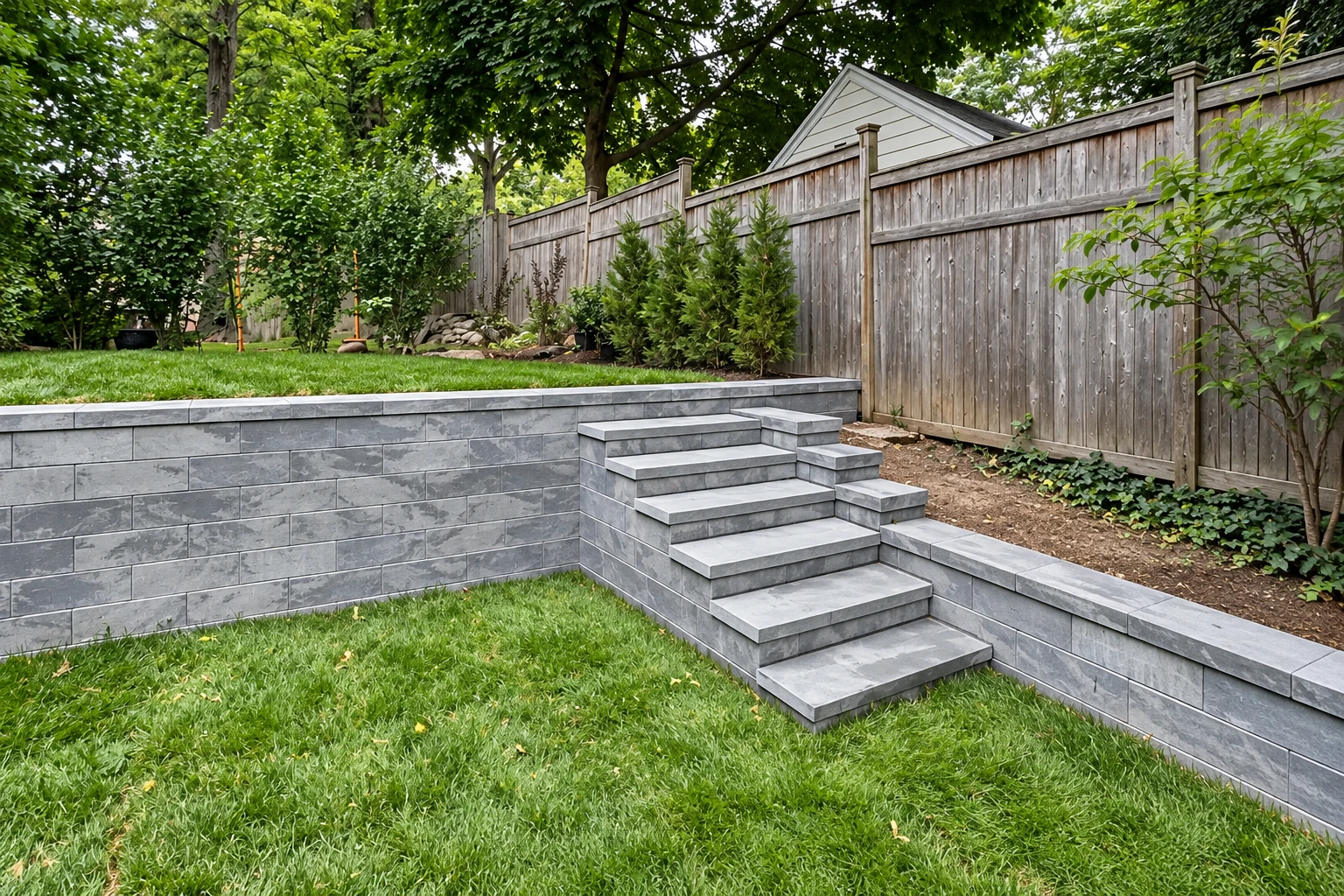
Interlocking concrete blocks stacked in courses, which the trade calls an SRW wall. It suits curves, steps and shorter walls, and it goes up without forms or a concrete truck in your yard.
Get a written estimate for your retaining wall
Send the form and we'll reply within one business day to set a time for me to come out. The estimate is free, in person and in writing, with no obligation. Have the wall's spot and any driveway plans handy.
(308) 371-8187- Based in
- Kearney, NE 68847
- Hours
- Mon–Fri: 6 AM–11 PM, Sat–Sun: 7 AM–11 PM
What happens after you call about a retaining wall?
From your first call to the final walkthrough, here's how a wall job runs and what you'll have in hand along the way.
Call or send a request
Call (308) 371-8187 or use the form, and we'll set a time for me to come see the site. Tell me roughly where the wall goes and how big the drop is.
We look, measure and write it
I come out, look at the slope, measure and ask how you'll use the ground above and below the wall. Then you get a written estimate, so the number is on paper before anybody digs.
Pick a date and build
Once you're ready, we pick a date that suits the job and the weather, since concrete has opinions about both. We dig and prep, pour or set the wall, finish it and clean up.
Walk through the finished wall
Before we leave, I walk you through caring for the new concrete and what to keep an eye on. Most of it comes down to keeping the water leaving where we planned.
Why Kearney property owners call Advanced Kearney Concrete for walls
The owner measures and builds it
I come out to look at the job, measure and write the estimate myself, then I work alongside our crew when we build it. The person who planned your drain is standing right there when it goes in.
In business since 2021
We've been in business since 2021, and I spent years on other people's concrete crews before that. That's where I learned what gets skipped when nobody's checking, and it's usually under the dirt.
Licensed, insured and easy to check
We're licensed and insured. The state requires contractors doing business in Nebraska to register with the Nebraska Department of Labor, and the department says registration doesn't ensure quality or guard against fraud, so treat it as a first check on any builder, not the last one.
On a retaining wall, the part that matters most ends up buried behind it. If you've got a slope that won't stay put, tell me about it or call (308) 371-8187.
Retaining walls and the work around them in Kearney
Frost decides how deep a poured wall's base goes around here. A frost-depth reference site puts Nebraska's frost line at roughly 36 to 42 inches statewide and notes that local jurisdictions can amend that figure, so the number for your wall is the one enforced by Kearney Building Services, and the city sends code questions to its Building Official. Before work starts we check with that office on what your wall needs, and we take care of the paperwork when it falls to us or walk you through it when it falls to you. The city also requires building contractors to register with Building Services before they start work in Kearney.
We're based in Kearney and work in the cities around it, and the walls we get called about usually tell the same story, a yard that drops toward a driveway or a walkout and water with nowhere to go. We see the same thing on jobs in Lexington and Holdrege, and we build them the same way there.
Questions about retaining walls in Kearney
How much does a retaining wall cost in Nebraska?
A retaining wall in Nebraska usually costs about $32 to $37 per square foot, which is the going rate across the state, not our price. Yours can land on either side of that depending on height, wall type, how deep the base goes and how much drainage it needs. I'll measure your wall and put the number in writing.
Does a poured retaining wall need a deeper base than a block wall?
Usually, yes. Poured-wall guidance says a poured wall's base should always sit below the seasonal frost line, while one block maker's guide says its segmental block walls don't need to. With the frost running as deep as it does here, covered above, a poured wall can mean a much bigger dig, so it's one of the first things we weigh when you're choosing between the two.
What causes a retaining wall to fail?
Poor drainage is by far the most common reason retaining walls perform poorly. Water that can't get out keeps adding weight and pressure behind the wall, so the drainage plan deserves a close look in every bid you get, ours included.
What causes weep holes in a retaining wall to stop draining?
Weep holes, the small openings that let water out through the face of a wall, often stop working because they clog from the wrong backfill, plants growing in them or animals moving in. If yours stay dry while the ground behind the wall stays soggy, they're probably plugged and the water is staying put.
Who has to register to build a retaining wall in Kearney?
Anyone you pay to build it. The state counts any person or business that does or arranges work on property other than their own as a contractor, so whoever builds your wall falls under the state registration rule and the city's own registration covered above.
Do I need to call 811 before building a retaining wall?
Industry installation guidance says yes, call 8-1-1, Call Before You Dig, to get underground utilities marked before anyone starts excavating. A wall's base goes well into the ground, and nobody wants to find the gas line with a shovel.
Related services that pair with a retaining wall
Concrete floor installation
If your new wall levels off ground for a shop, shed or outbuilding, a floor slab on a packed base turns that flat spot into a working floor.
Concrete pool decks
Building into a slope for a pool usually means a wall first, then a deck that sends splash water away from the pool and the wall.
Cities where we build retaining walls
Advanced Kearney Concrete is based in Kearney, Nebraska, and builds retaining walls across the three cities listed here, Lexington and Holdrege among them. We work in other cities around them too, so if yours isn't listed, give us a call.
Kearney, NE
Get your retaining wall measured and priced
Call (308) 371-8187 or send the form with where the wall goes and how high the drop is, and I'll come out already knowing what to look at.